Understand Tongue Tie and Its Impact
Discover what a tongue tie is, common symptoms, and how it may affect feeding, speech, and oral health. This overview offers clear information to help you recognise the condition and understand available treatments.


What is Tongue Tie or restricted lingual frenulum (RLF) ?
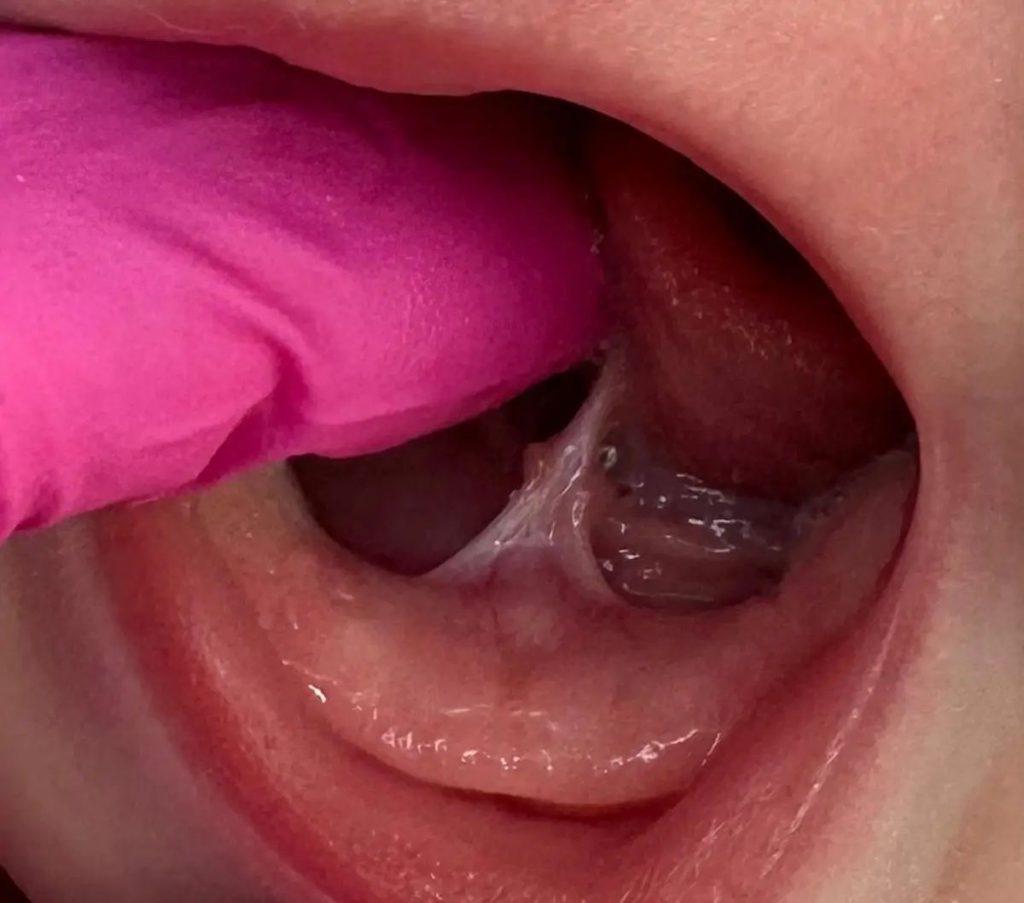
Tongue tie also known as ankyloglossia is a condition in which a persons tongue remains attached to the floor of the mouth. This occurs when the lingual frenulum (a thin strip of tissue connecting your tongue and the floor of your mouth) is shorter than usual. A short frenulum can restrict your tongues movement. Ankyloglossia is most common in new-borns, and young children. Most commonly associated with breastfeeding difficulties and also believed to have some impact on speech and / or oral hygiene problems. The true impact of tongue tie on speech isn’t clearly understood. More research is needed. However, the child’s tongue needs contact with the roof of the mouth when pronouncing the lingual sounds “I” “d” “z” “s” “th” “n” and “t”. when the tongue is severely restricted and cannot reach the roof of the mouth, the child could have problems with articulation of these sounds.
Do all babies have a tongue tie?
Anyone can develop a tongue tie. Tongue tie is congenital, which means people are born with it. If one of your babies have a tongue tie, then its likely the others will too. Ankyloglossia occurs in up to 10% of newborns.
Signs and symptoms of tongue tie
for both breast and bottle fed babies
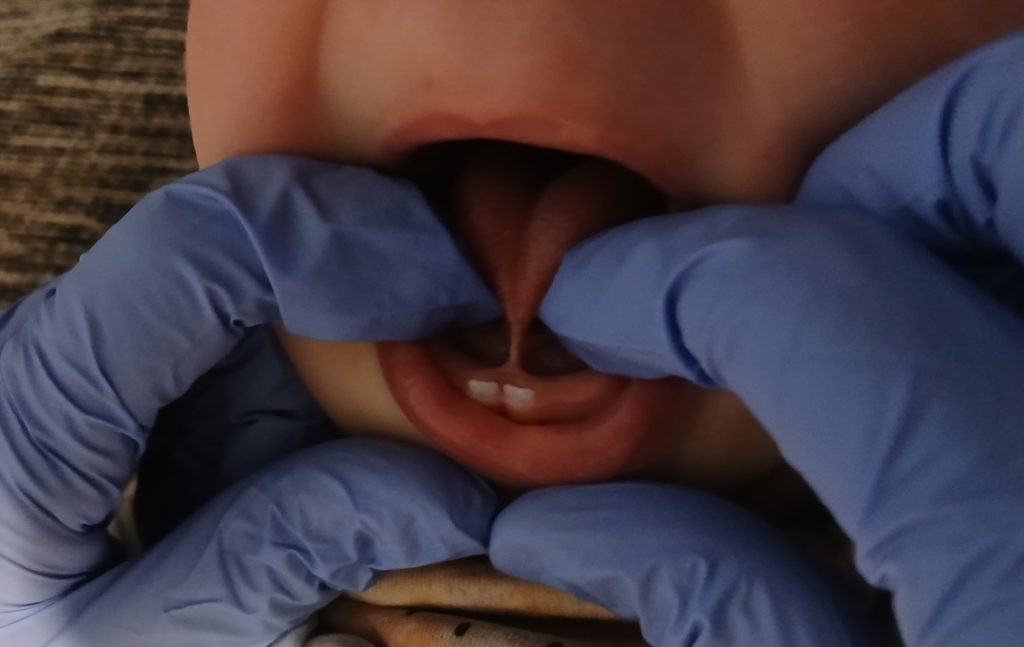
Symptoms of tongue-tie range from insignificant to significant meaning it either affects feeding or it doesn’t. Your child’s tongue may appear heart shaped or may have a notch in it. It may also appear to be spade like and sit flat in the bottom of the mouth.
New-born tongue-tie may result in:
- Difficulty latching when breastfeeding
- Baby shows signs of frustration or fussiness
- Baby’s mouth does not cover enough of the areola
- Clicking sounds while feeding
- Nipples appear flattened or misshapen after
- Baby is not gaining weight adequately
- Baby feeds for very short or very long periods
- Pain or discomfort in the mother’s nipples during feeding
- Baby frequently falls asleep at the breast without effective sucking
- If the baby is feeding from a bottle they may be dribbling and loosing milk from the corners of the mouth. Struggle to maintain a good suction on the teat. They may Suffer from colic/reflux not responding to treatments.